
Campaigns · · 9 min read
The ten spill promise: what it means for the Dart
South West Water has promised no more than 10 spills a year at 23 Dart storm overflows by 2030. What that promise really means, why it is so hard to check, who is left out, and how we will hold SWW to it.
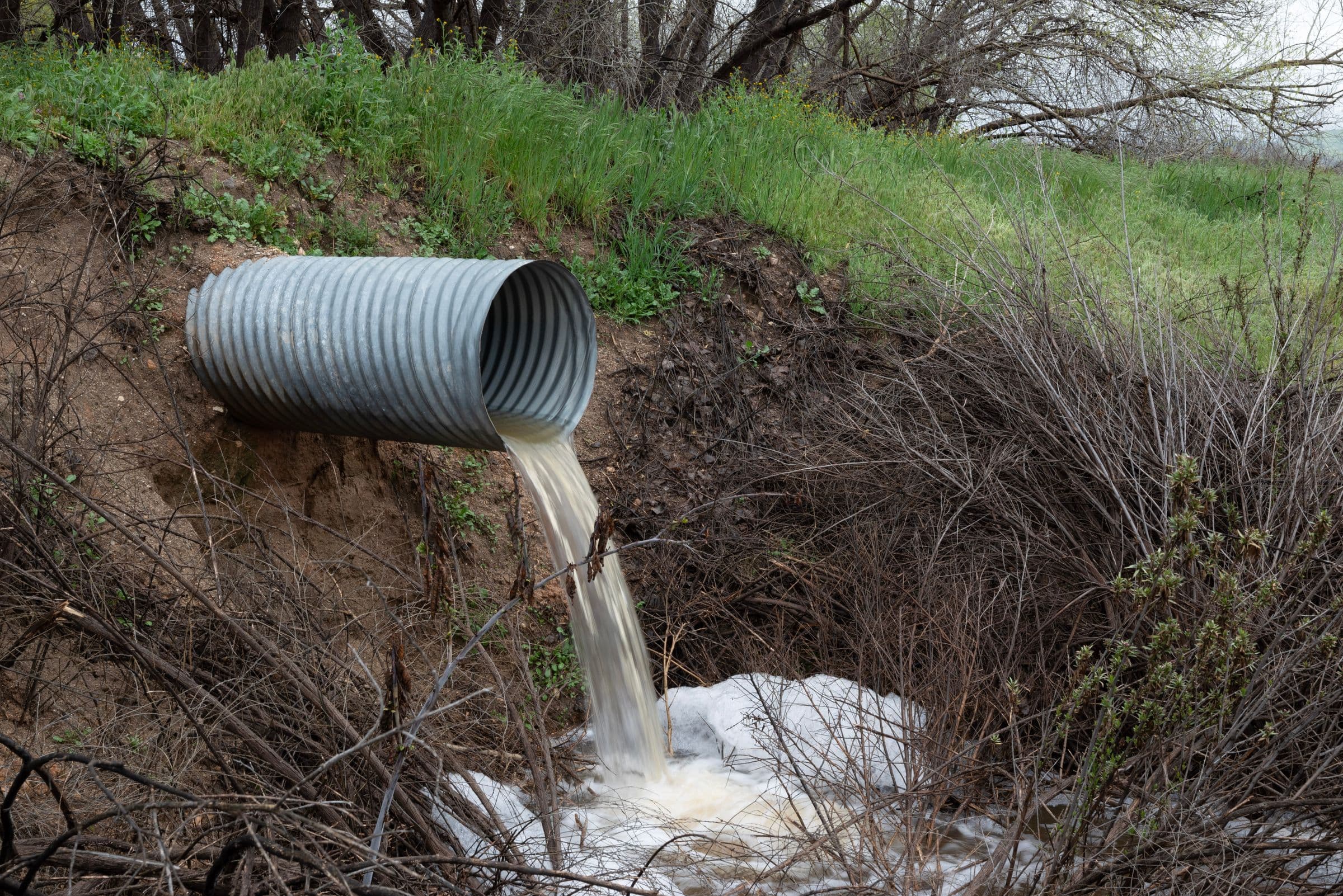
South West Water has committed to cut spills at 23 storm overflows on the Dart to no more than 10 a year on average, with tighter limits in the bathing season at the overflows closest to Totnes, Stoke Gabriel, Dittisham, Dartmouth and Kingswear. The first deadline is 31 March 2027 at Shinners Bridge in Dartington, and the last is 31 March 2030. We set the schemes out in our earlier post on SWW's Dart investigations.
This post covers what that promise means in practice: where the 10 comes from, what counts as a spill, how anyone will know if it's kept, and who is left out. We also want to admit a failing on our part. These commitments were public, and we missed them. The Environment Agency published the 2025 to 2030 programme on 29 January 2025, and the Dart schemes have been in it since then. SWW's interim investigation reports, which put spill figures against each overflow, followed between 23 December 2025 and 31 January 2026.
Hard to find, hard to check
Every one of these schemes sits in the Environment Agency's Water Industry National Environment Programme, or WINEP, the list of work each water company has to deliver between 2025 and 2030. The dataset is open to anyone: you can download the EA's spreadsheet or browse it on the EA's WINEP map. The trouble is that it's very hard to tie an entry in it to a particular pipe on a particular stretch of river.
There's no shared asset identifier: no code that links a commitment to a specific site. The spill data comes from the monitors on each overflow, and WINEP has its own reference numbers that appear nowhere else, so far as we can tell. The one link between them is the permit reference, and 16 of the 23 Dart overflow schemes don't carry one. On those same 16 records, the field that should hold the regulatory driver, the code that says which rule the scheme is meant to satisfy, holds the placeholder "Grid Reference Required" instead. That leaves a location flagged as missing and no driver. None of the 23 records names a water body either. Nationally, 1,351 WINEP records carry the same placeholder.
The names don't help as much as you'd hope. Every record has one, but in the company's internal shorthand ("BRIDGETOWN STEAMER QUAY_CSO_TOTNES"), which doesn't always match the name on the spill data. We think "DARTINGTON SCH TWO" in WINEP is the overflow the monitoring data calls Dartington B, but we can't be certain without further correspondence with SWW or the EA. And the text of most schemes says only "Improvement of assets discharging into designated bathing water" or "Reduction of spills to meet EnvAct_IMP drivers". Nothing in the record says the target is 10 a year. You have to know what the driver code means, and on 16 of the records there's no driver code to look up.
We matched the records by hand, permit by permit and name by name. That work is in our Dart WINEP and SOAF workbook, and it was SWW's own interim investigation reports, obtained under the Environmental Information Regulations, that finally put numbers to the schemes. They are on our Resources page. This shouldn't be detective work. If the public can't tell which overflow a commitment covers, the public can't check whether it was met, and that's a problem for accountability, not just for us.
Where the 10 comes from
People often assume the 10 a year limit is in law. It isn't, or not yet. The Environment Act 2021 required the government to publish a plan to reduce storm overflow discharges and to report on it every five years. It also made companies publish discharges within an hour, which they have done since January 2025. But the Act sets no number. The 10 comes from the government's Storm Overflows Discharge Reduction Plan, published in 2022 and expanded in 2023: "Storm overflows will not be permitted to discharge above an average of 10 rainfall events per year by 2050."
In April 2023 the government promised to enshrine that target in law. We can't find any sign that it did. Defra's December 2025 progress report and the House of Commons Library's March 2026 briefing both still describe it as a target in the plan.
What gives the target teeth is the permit each overflow operates under. The Environment Agency has begun adding spill limit conditions to those permits, and Defra says each overflow "will be permitted at the most stringent spill frequency under the Plan". Once a permit carries that condition, going over it is an offence the EA can enforce, with the wider powers it got under the Water (Special Measures) Act 2025. Until then, the commitment in SWW's reports is a promise, not a legal limit. That's why we'll be checking that each Dart permit is actually changed when its scheme is finished.
What "10 a year" really means
Two details decide whether 10 a year means what most people think it means.
The first is the average. Defra's guidance defines it as the average over 10 consecutive years. Schemes are designed against 10 to 25 years of rainfall records, and the wet years can't be left out. So an overflow that spills 18 times in a wet year hasn't broken the target. It only fails if the 10-year average goes over 10.
The second is what counts as a spill. A discharge is sewage actually flowing out of the pipe, and the monitor records every one. A spill, for counting purposes, is a block of time worked out from those discharges using what's called the 12/24 hour method. Anything in the first 12 hours counts as one spill, however many times the overflow starts and stops. If it keeps going, each further 24 hours counts as another, and the clock resets after 24 hours without a discharge. So ten short bursts in one afternoon are one spill, while a discharge that runs for three days is three. Defra is clear that the count "is not limited to spills caused by rainfall", so dry-weather discharges count too. Some permits and bathing water rules use a different measure again, the "significant spill" of more than 50 cubic metres. We'll always say which measure we're quoting.
The bathing season limits work the same way. Overflows within a kilometre of an estuary bathing water can average no more than three spills a season where the water is rated Good, and two where it's Excellent. Those are also averaged over at least 10 years.
Who is left out
All 23 schemes are on the estuary, in Dartington, or around Totnes and Buckfastleigh, because national rules put overflows near bathing and shellfish waters first. Upstream, the picture is very different. Harberton has two overflows averaging 150 and 126 spills a year. Broadhempston averages 133, Holne 129, Princetown 126, Harbertonford 120, Cornworthy 119 and Scorriton 109. These are the long-term averages in the 2025 monitoring returns, the latest available, so some are lower than the 2024 figures in our earlier post. None of them has an improvement scheme in the 2025 to 2030 programme, and Holne and Scorriton aren't in WINEP at all. For these communities the 10 a year target is a 2050 promise, or 2045 at best. Follow the progress for these on River Hub.
There's a second gap. When we went through the Environment Agency's 2024 data in August, 16 Dart overflows averaged more than 10 spills a year, the point at which the national framework says an overflow should be investigated. The EA's records said "No SOAF investigation required" for all of them. The list includes Princetown's storm tank, Textile Mill, Furzegood, Scout Hut and Mill Creek. One of them, the Old Woollen Mill, is down as needing no investigation and has a storm overflow investigation in WINEP. Then, in the 2025 data, the EA dropped the investigation status field altogether. That information was public for one year.
The national picture doesn't give much comfort. Defra's December 2025 progress report says South West Water and Wessex Water "are not on track" against their storm overflow commitments. That's one more reason to watch the Dart schemes closely rather than take the dates on trust.
How we'll hold SWW to it
A 10-year average has an awkward side effect. If the Steamer Quay overflows are finished in March 2030, nobody can formally say they've failed until about 2040. Defra admits the 10-year averages "cannot yet be calculated", and the national framework lets a company restart an overflow's average once a scheme is complete.
There's a simple way round this. An average of 10 over 10 years means no more than 100 spills in total. So for each of the 23 overflows, we'll start a running count on the day its scheme is finished. If an overflow passes 100 before year ten, it has failed, whatever happens in the years left. Before that, if the total after a given number of years is more than ten times that number, the overflow is heading for failure and we'll raise it then, not in 2040.
Alongside that count we'll do four other things:
- Check that each scheme is finished by its date and that the Environment Agency has actually issued a new permit with a spill limit, using the public register or an information request where we need to.
- Take SWW's annual monitoring returns every March and update the count for each overflow.
- Between 15 May and 30 September, log bathing season spills at the overflows near Steamer Quay, Stoke Gabriel, Dartmouth and Kingswear from the live data, against their limits of two or three a season.
- Keep a record of when monitors are down. Defra treats an overflow with a missing month of data in the bathing season as non-compliant, so gaps in the data are something we'll report.
We'll also check live spill alerts against Environment Agency rain gauge data. A discharge with no rain behind it is unlawful now, without waiting for any 10-year average. We'll publish the counts on RiverHub, overflow by overflow, in real time.
Beyond storm overflows
Even if every overflow meets its limit, that won't make the river safe to swim in. Storm overflows are only part of the story. Treatment works discharge treated effluent every day, in all weathers. Standard treatment takes out solids and much of the organic load, but it leaves most of the bacteria. The step that deals with those is tertiary treatment, usually ultraviolet disinfection.
Of all the Dart commitments in SWW's reports, only one does that: UV at Kilbury treatment works near Buckfastleigh, due by 30 April 2028. No other works on the river is getting it, although Totnes, close to the Steamer Quay bathing water, already has UV treatment.
So we'll be pushing for UV at any treatment works that affects a designated bathing water, or a stretch of river people actively use for swimming and paddling, such as Dartington. The government is reviewing the targets in 2027, ahead of the next five-year programme from 2030, and SWW's final investigation reports are due in March 2027. Those are the points where this case has to be made. Our own E. coli sampling between Steamer Quay and Stoke Gabriel will be the evidence behind it.
What you can do
While we monitor SWW, it's important that we all do what we can to reduce our own contribution to the problem. Read the Household River Care Manual to find out what you can do, and sign our river-friendly home pledge, which shows regulators how many people in the catchment care about this.
We'll update this post when SWW publishes its draft final reports in December 2026.