
Testing results · · 1 min read
Petrifilm Validation Process Using Quarterly Laboratory Testing
Before adopting Petrifilm plates for routine monitoring, we validated their reliability by comparing E. coli results with those from an accredited lab. Quarterly checks now ensure consistency, with split samples analysed both in-house and by the lab. By comparing patterns across sites, we confirm Petrifilms remain a dependable, cost-effective tool for tracking pollution in the Dart catchment.
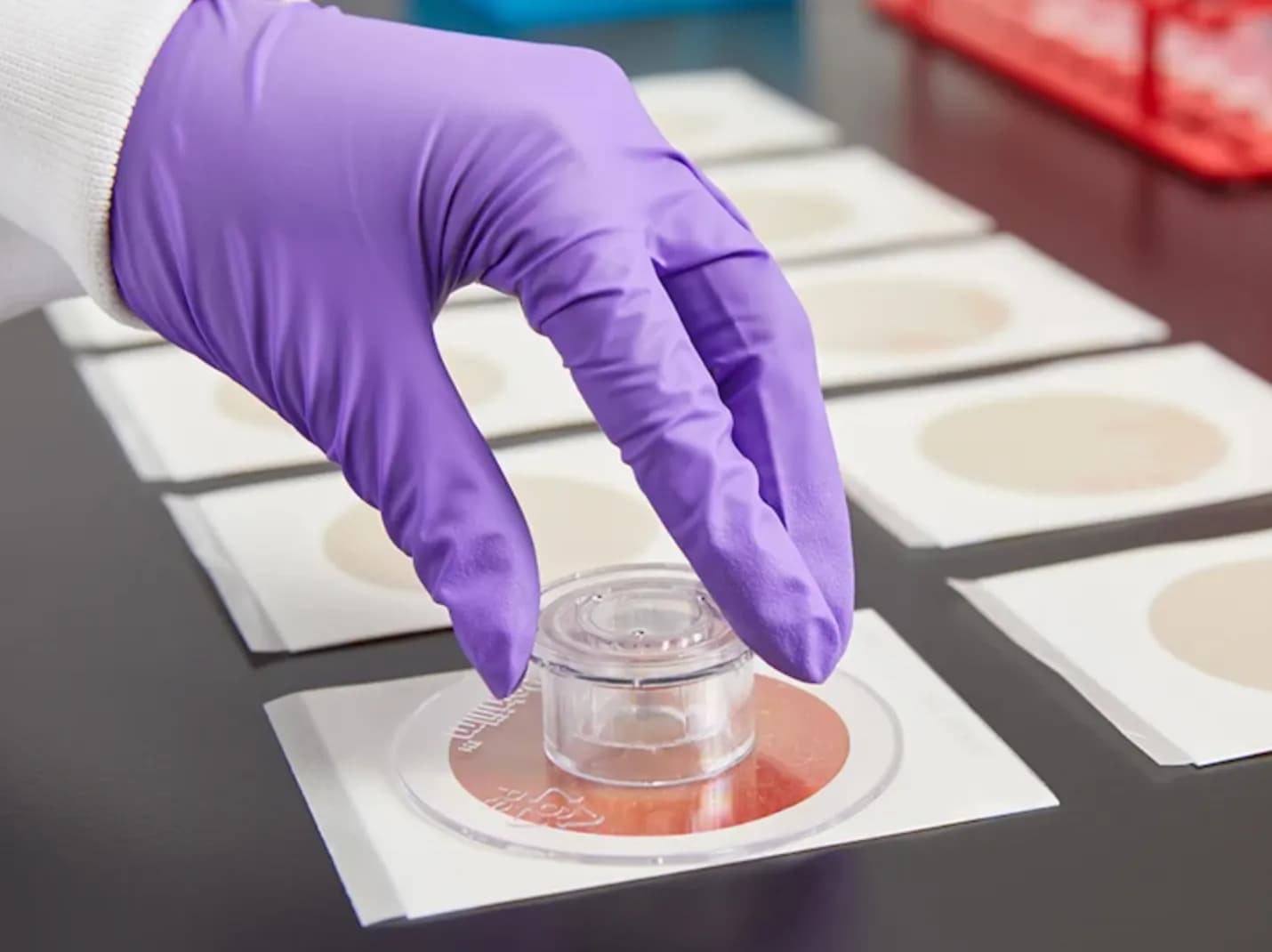
Before incorporating Petrifilm plates into our routine monitoring programme, we conducted a validation study to assess their reliability. This involved comparing E. coli counts generated using Petrifilms with results from an accredited laboratory across a representative set of water samples. The findings supported the use of Petrifilms as a robust tool for identifying pollution patterns in the Dart catchment. You can read the full validation study here.
To ensure the continued reliability of our E. coli data, we now carry out quarterly validation against results from an accredited laboratory.
At each validation point, a subset of water samples is selected from our routine monitoring. These samples are split into two equal portions:
● One portion is delivered to an accredited laboratory for quantitative E. coli analysis.
● The other portion is processed in-house using Petrifilm plates, following our Standard Operating Procedure (SOP).
Following analysis, the E. coli counts from both methods are compiled and plotted, allowing for direct visual comparison of results. This dual-plotting approach enables us to assess whether the overall pattern of pollution across sites—as indicated by Petrifilm results—matches that of the lab-generated data.
As our primary aim is to track relative E. coli levels across different tributaries and locations in the catchment, our validation focuses on consistency in spatial pollution patterns rather than exact one-to-one numerical agreement. This ensures that the Petrifilm method remains a reliable, cost-effective tool for identifying pollution hotspots and informing catchment-scale decisions.